
By Gabriela Antezana
From the Greek root, Poly means many, while Amor(y) comes from the Greek root love. Polyamory is the practice of being in a relationship and or having feelings with more than one person at a time.
Much of the American society does not understand the meaning behind polyamory, leading to many stigmas and misappropriation of the lifestyle. Being exposed to the American society, we have been socialized to believe that monogamous relationships are the norm and the people who practice otherwise are burdens to society, “individuals in polyamorous relationships (compared to those in monogamous relationships) were perceived as being (a) higher in promiscuity, unsafe sexual practices and sex drive; (b) lower in trustworthiness and morality” (Hutzler, Giuliano, Herselman, & Johnson 2015). The lack of education on this topic creates stigmas and misconceptions because many people do not know how else to perceive the way of polyamory. Polyamory is more about self-love, freedom of choice, flexibility, and finding yourself rather than what society perceives it to be.
Many of the misconceptions that have developed through the lack of education provided to society include; avoiding commitment (and or swinging), eliminating love or intimacy, and no feelings of jealousy (Sheff 2019). According to society, the humans that consciously engage in non-monogamous relationships seem to lack ethical consciousness and lack moral value. This claim is far from the reality that polyamorous people face. All humans experience emotions. Being in a non-monogamous relationship does not make anyone less human. According to Elisabeth Sheff and Corie Hammers, one of the dominating stigmas that burden the poly community is the label pervert (2011). Being sexually marginalized and labeled as pervert creates an image that polyamorous people are sexually deviant and or dysfunctional. This stigma generates society to think that polyamorous people may think of everyone who comes across their path may be a potential sexual partner. It is understood that even within the boundries and community of polyamory, there lies many stigmas and marginalizations that the people perpetuate on eachother, whether it has to due with the way they look or their sexual orientation. This contributes to the negativity that many experience being a part of this community.
Many stigmas force many of the polyamorous people from coming out to their family and friends about their relationships. Many polyamorists feel that they have to hide their relationships from the public because of the judgments and stigmas they could potentially face and not being fully accepted into their society (Lehmiller 2017). Polyamorous people would rather keep it their dating status secret making it seem to the general public that they are a minority when in reality many do practice this particular lifestyle. Non-monogamous relationships have been nothing but the norm since the very early stages of human evolution. Anthropologist found that recently in the deep jungles of Brazil, many villages consider non-monogamous marriages as the norm (Ryan & Jethá 2010). Non-monogamous relationships have always been around but little to no education or attention has been given to the public about it.
The stigmas that have been developed over the years have placed the practice of polyamory under an umbrella of unacceptable behavior, which is the opposite of embracing it much like some Brazilian villages. Overall, people in polyamorous relationships experience a wide range of stigmas and misconceptions because of the lack of education and understanding the general public has regarding this way of life.

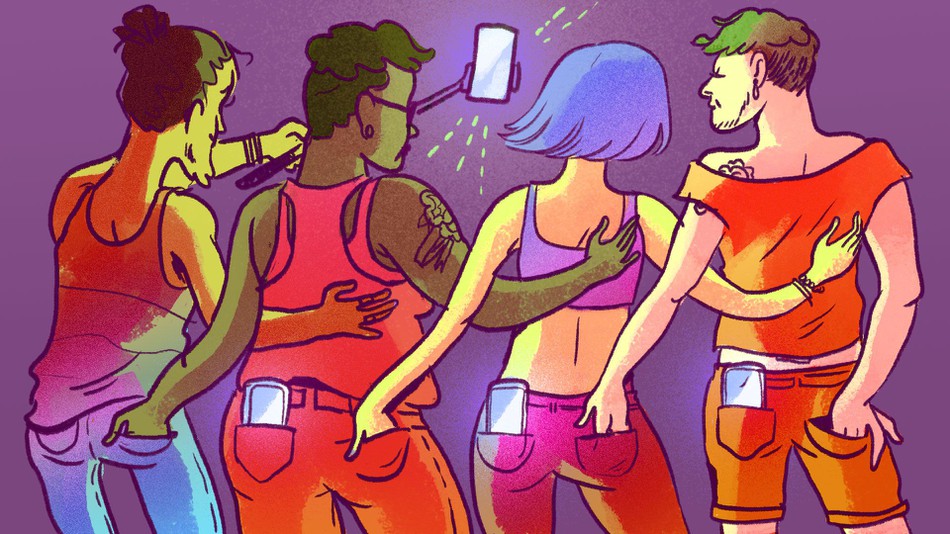
 Breaking Relationship Norms